

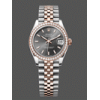

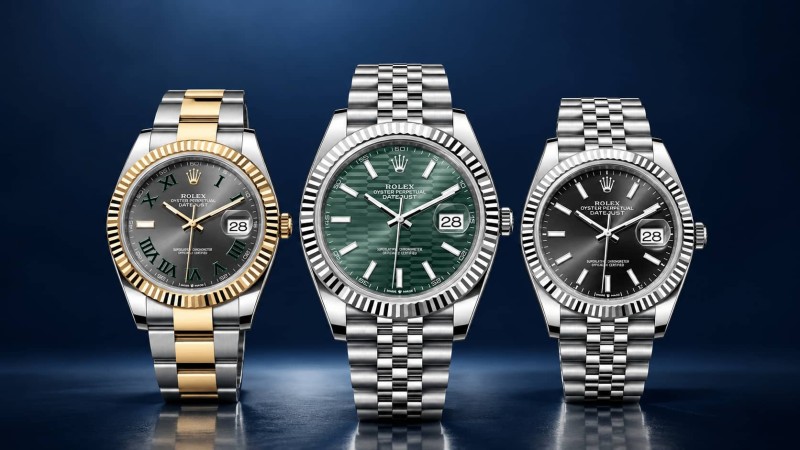
A typical Datejust comparison starts with size, bezel and metal: 36 versus 41 mm, smooth versus fluted, steel versus two-tone. We started somewhere else and asked which references are actually being traded, by the sales volume WatchCharts reports. The WatchCharts Datejust collection in our August 2026 dataset holds 181 references, Lady-Datejust models included, and recorded 105,340 sales over twelve months — about 2.7 times the Submariner dataset we analysed earlier in this series. One reference, the 126334, accounts for 10,217 of those sales on its own, roughly twice the most-traded Submariner (126610LN, 4,866) and 1.9 times the most-traded GMT-Master (126710BLNR, 5,305). And while that single winner is a 41 mm watch, six of the ten most-traded Datejusts are 36 mm.
How this ranking works
Every reference is scored on a WatchCharts snapshot taken in August 2026. The ranking key is WatchCharts' twelve-month sales volume — the sales figure WatchCharts reports for each reference over the preceding year. Market prices are WatchCharts' price estimates in EUR under its published methodology, and the one-year trend is the change in that estimate over the same twelve months. For current references, list price is the Rolex European list price recorded in the snapshot; list prices reflect the configurations recorded there, and differences between references may include bezel material and bracelet type, so market-to-list comparisons are made at reference level rather than for identical configurations. For the five discontinued references in the top ten we show no list-price comparison: a historical benchmark would have to be a final list price we could trace to a dated source and currency, and for these references we could not do that to our own standard. They appear with market price, sales volume and trend only.
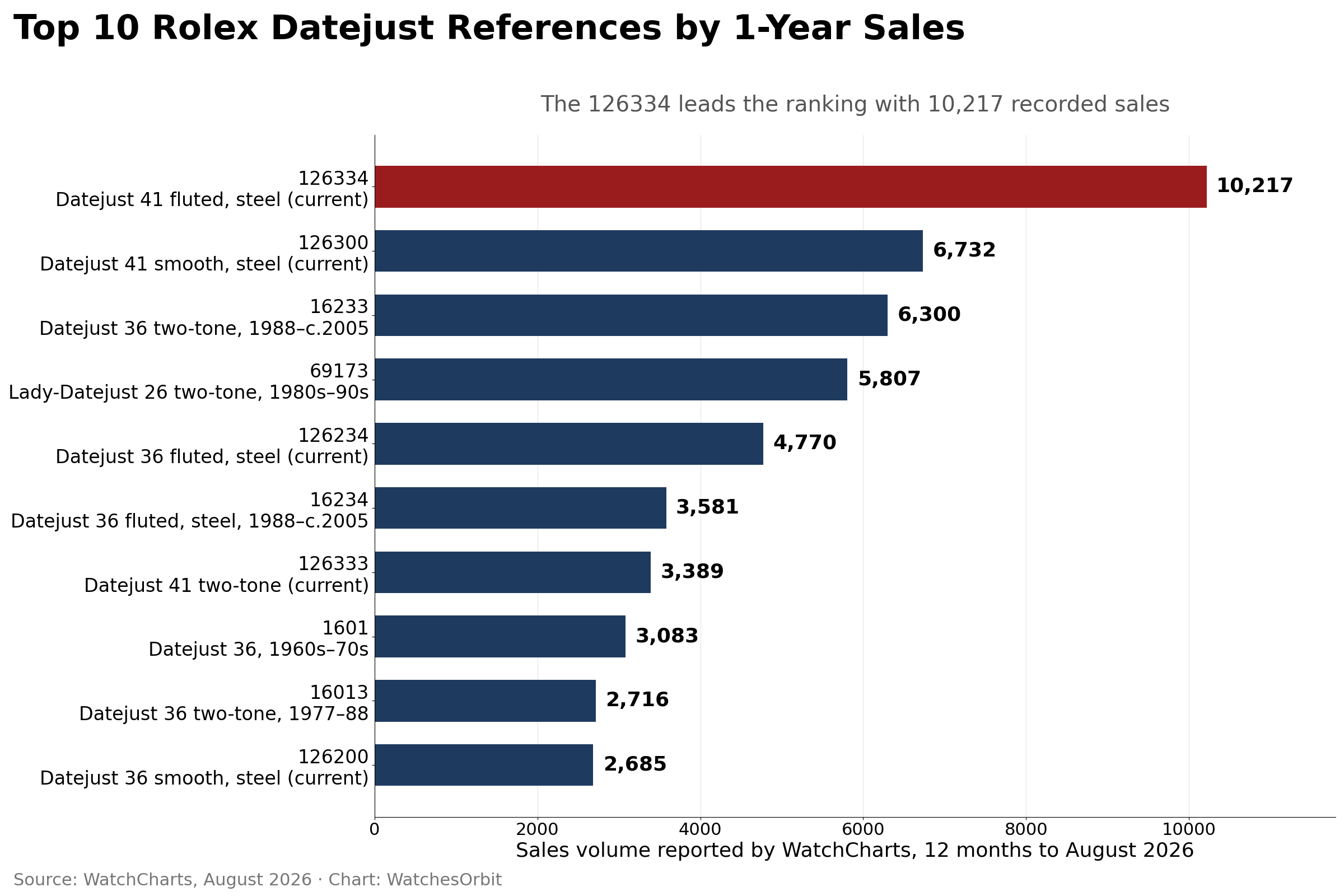
The ten most-traded Datejusts
| # | Reference | Model | Market price | List price | vs list | 1Y sales (WatchCharts) | 1Y trend |
|---|---|---|---|---|---|---|---|
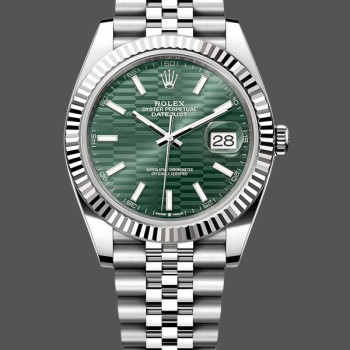
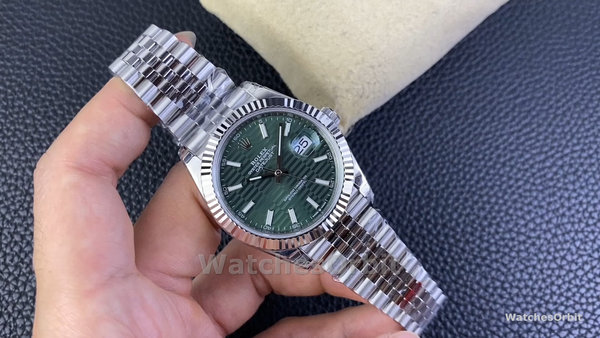
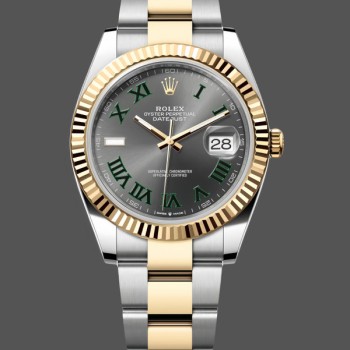
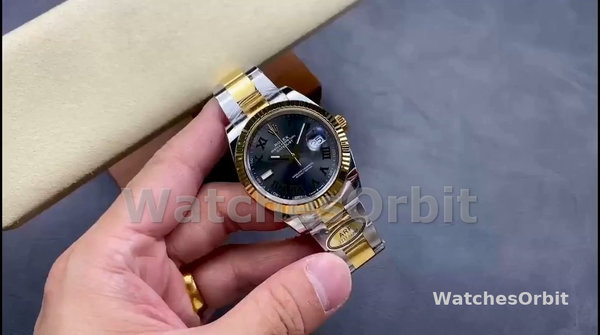
| 1 | 126334 | Datejust 41, steel, white-gold fluted bezel, 2017–current | €12,545 | €11,250 | +12% | 10,217 | +10.2% |
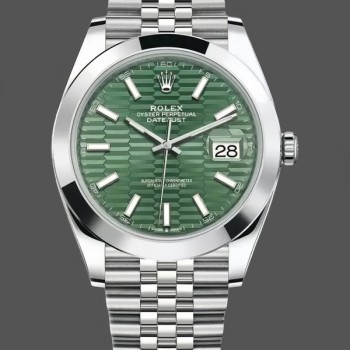
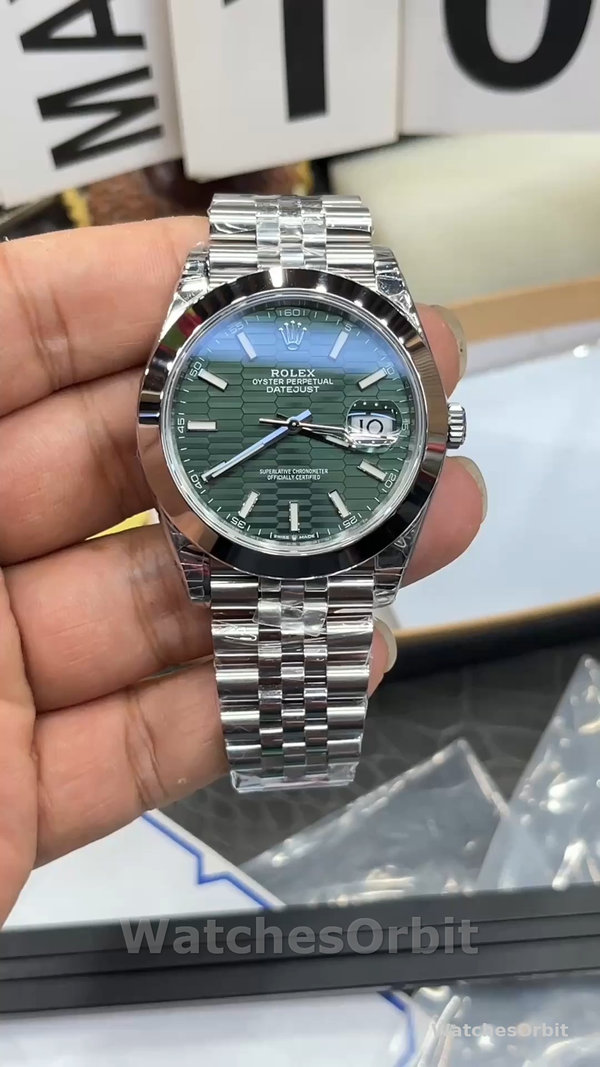
| 2 | 126300 | Datejust 41, steel, smooth bezel, 2017–current | €8,781 | €8,600 | +2% | 6,732 | +7.5% |
| 3 | 16233 | Datejust 36, steel & yellow gold, fluted bezel, 1988–c.2005 | €6,098 | — | — | 6,300 | +7.0% |
| 4 | 69173 | Lady-Datejust 26, steel & yellow gold, 1980s–1990s | €4,946 | — | — | 5,807 | +17.0% |
| 5 | 126234 | Datejust 36, steel, white-gold fluted bezel, 2019–current | €11,013 | €9,550 | +15% | 4,770 | +11.8% |
| 6 | 16234 | Datejust 36, steel, white-gold fluted bezel, 1988–c.2005 | €5,965 | — | — | 3,581 | +9.3% |
| 7 | 126333 | Datejust 41, steel & yellow gold, fluted bezel, 2016–current | €13,414 | €16,300 | −18% | 3,389 | +7.7% |
| 8 | 1601 | Datejust 36, steel, white-gold fluted bezel, 1960s–1970s | €4,322 | — | — | 3,083 | +9.4% |
| 9 | 16013 | Datejust 36, steel & yellow gold, fluted bezel, 1977–1988 | €4,890 | — | — | 2,716 | +13.2% |
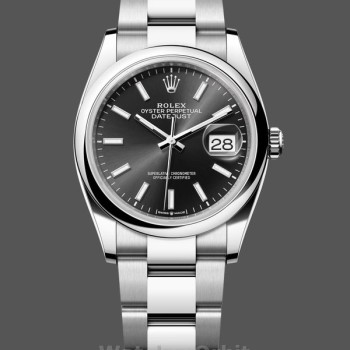
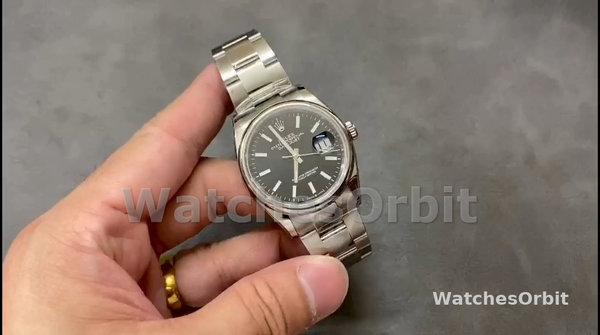
| 10 | 126200 | Datejust 36, steel, smooth bezel, 2019–current | €8,053 | €7,850 | +3% | 2,685 | +12.5% |
— No list-price comparison is shown for discontinued references; see the methodology note. List prices for current references reflect the configurations recorded in our August 2026 snapshot. Source: WatchCharts, August 2026.
Key takeaway: in our August 2026 dataset, the Rolex Datejust 126334 recorded 10,217 sales in twelve months — the highest figure among the 181 Datejust references analysed.
Reference by reference
1. Datejust 41 126334 — 10,217 sales, the most-traded Datejust in our dataset
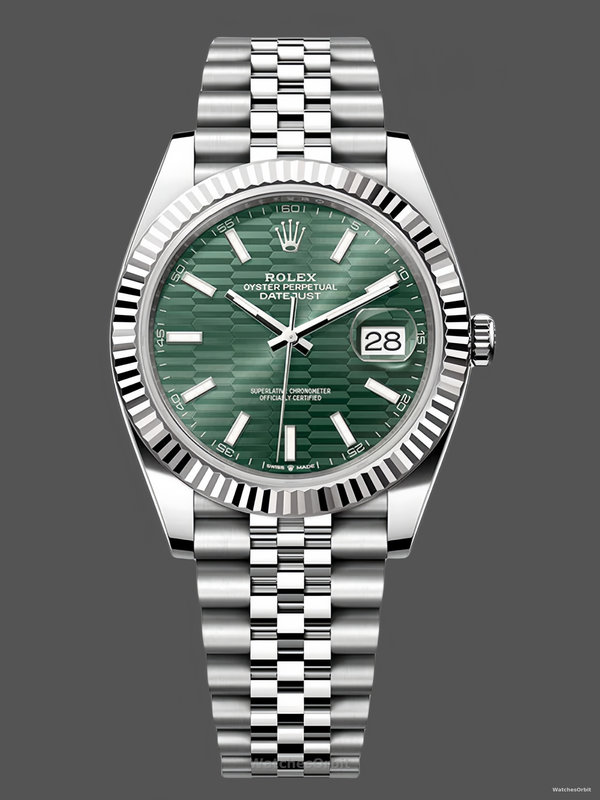
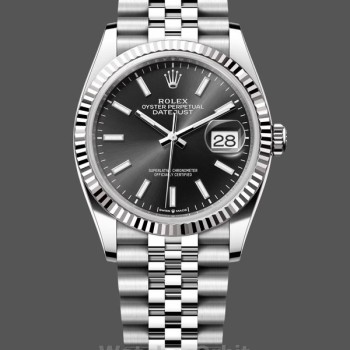
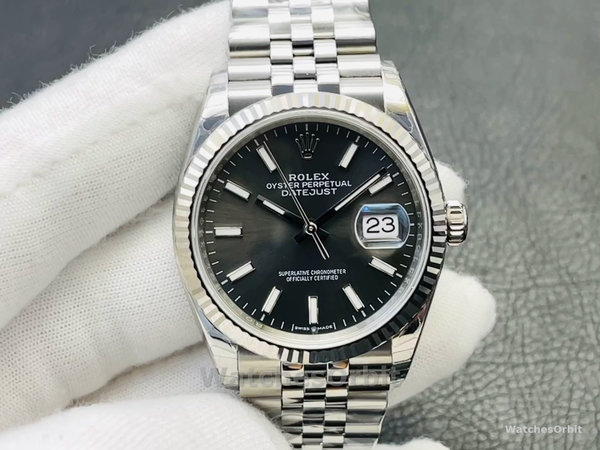
The Datejust 41 arrived in 2016 in two-tone form; the steel version with a white-gold fluted bezel followed in 2017, with the calibre 3235 and its 70-hour power reserve, on either an Oyster or a Jubilee bracelet. At €12,545 it trades 12% above the €11,250 list price recorded in our snapshot. Its 10,217 sales in twelve months put it 3,485 ahead of the second-placed 126300, and its price estimate rose 10.2% over the year. Available in our Datejust collection.
2. Datejust 41 126300 — 6,732 sales, 2% above list
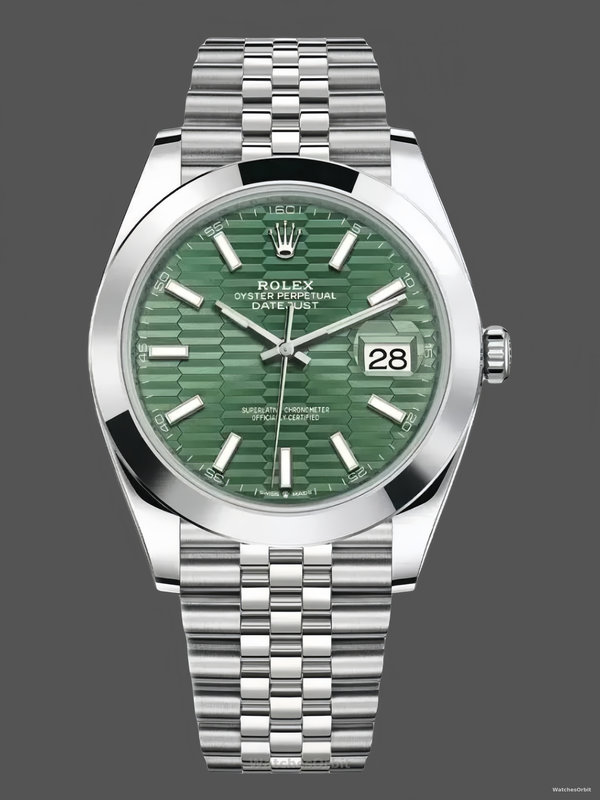
The 126300 takes the plainer route: the same 41 mm case and calibre 3235, introduced in the same year, but with a smooth steel bezel. It trades at €8,781 against a recorded list price of €8,600 — the closest to its list price of any of the ten references here. Fluted and smooth share a case and a movement; in this snapshot they sit 12% and 2% above their respective recorded list prices, with the smooth version 7.5% up on the year. In stock.
3. Datejust 36 16233 — the five-digit two-tone, 6,300 sales
The two-tone Datejust 36 of the sapphire-crystal era: steel case with a yellow-gold fluted bezel and Jubilee centre links, the calibre 3135, produced from 1988 until around 2005. Its estimated market price is €6,098, up 7.0% over twelve months, and its 6,300 sales make it the most-traded discontinued reference in the top ten — and the most-traded 36 mm reference of any kind here, current ones included.
4. Lady-Datejust 26 69173 — 5,807 sales and the largest one-year rise
The only ladies' reference in the top ten, and the only one under 30 mm: a 26 mm two-tone Lady-Datejust with the calibre 2135, produced from the early 1980s into the 1990s. It trades at €4,946, and its 17.0% rise in price estimate over twelve months is the largest of any reference here. Its 5,807 recorded sales put this 26 mm reference fourth overall, ahead of every current 36 mm Datejust.
5. Datejust 36 126234 — the 36 mm fluted, 15% above list
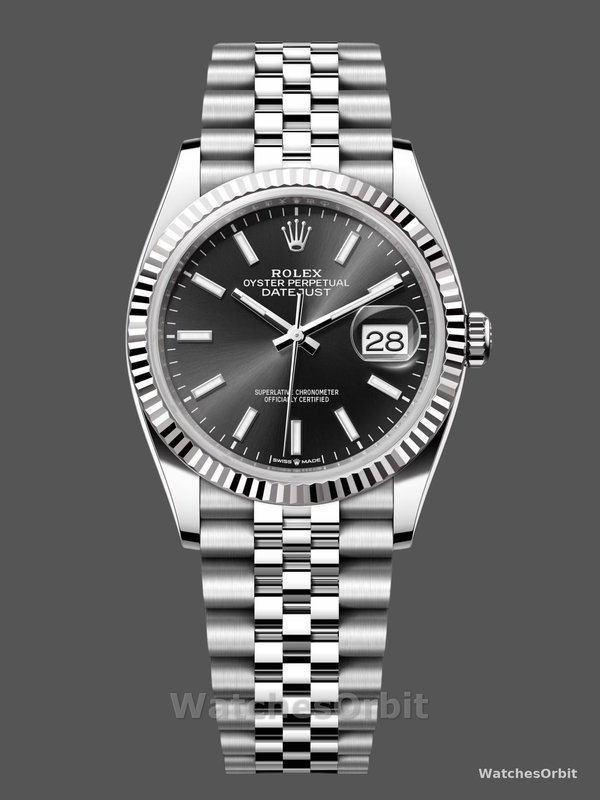
The current steel Datejust 36 with a white-gold fluted bezel, introduced in 2019 with the calibre 3235. At €11,013 against a recorded €9,550 list price it trades 15% above list — the largest premium among the four current steel-cased references in this top ten. The reference recorded 4,770 sales, while its price estimate rose 11.8% over the year. In stock among our Datejust models.
6. Datejust 36 16234 — 3,581 sales for the discontinued steel-cased 36
The steel counterpart to the 16233: same 36 mm case and calibre 3135, with a white-gold fluted bezel instead of yellow gold, produced from 1988 until around 2005. By sales volume the 16234 ranks sixth, with 3,581 recorded sales, at an estimated market price of €5,965 and a 9.3% one-year rise, ahead of the 16233's 7.0%.
7. Datejust 41 126333 — the only current reference below list, −18%
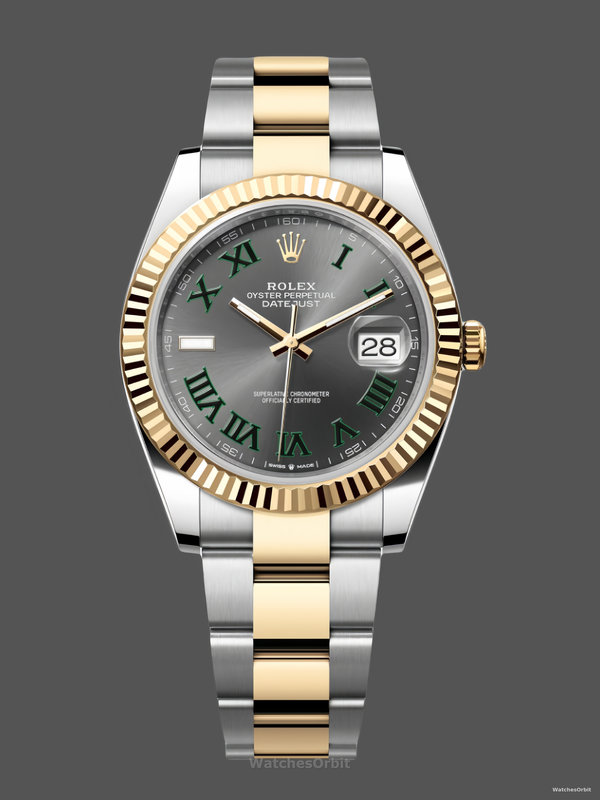
One of the launch references of the Datejust 41 in 2016: steel and yellow gold with a fluted bezel, calibre 3235. Its recorded list price is €16,300; its market price €13,414. That is 18% below list, and it is the only current-production reference in the top ten to trade below its list price. With 3,389 recorded sales it ranks seventh in this dataset. In stock.
8. Datejust 36 1601 — the vintage 36
A four-digit reference from the 1960s and 1970s: a 36 mm steel case with a white-gold fluted bezel, acrylic crystal, and a 1560/1570-family automatic movement with a date that has to be advanced by winding the hands. The 1601 is the earliest-generation reference in this ranking. It trades at €4,322 and recorded 3,083 sales, with a 9.4% one-year rise — larger than two of the five current references here.
9. Datejust 36 16013 — 2,716 sales for a 1977–1988 two-tone
Powered by the calibre 3035, this two-tone 36 mm reference was one of the early Datejusts with a quick-set date, produced from 1977 to 1988. It trades at €4,890, and its 13.2% one-year rise in price estimate is the second-largest in the top ten after the 69173 — among the discontinued two-tone references here, the 69173 and 16013 recorded the largest one-year increases in price estimate.
10. Datejust 36 126200 — the smooth-bezel 36, 3% above list
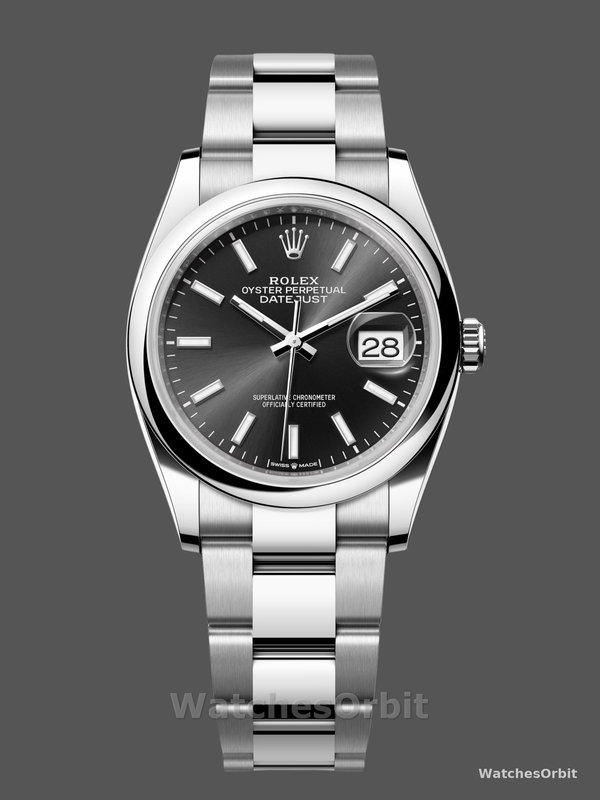
Introduced in 2019 alongside the 126234, this smooth-bezel 36 mm steel reference houses the calibre 3235. It trades at €8,053 against a recorded €7,850 list price. Both smooth-bezel references in the top ten sit close to their recorded list prices: 3% for the 126200 and 2% for the 126300. Its estimated market price rose 12.5% over the year, the largest increase among the five current references here; it recorded 2,685 sales. Available in our Datejust range.
What the numbers say
A common question in Datejust comparisons is 36 versus 41 mm, so we added up all 181 references in the snapshot by case size — our own aggregation of the same reference-level records, not a figure WatchCharts publishes separately. The 36 mm references recorded 45,730 sales; the 41 mm references 26,366; the 26 mm Lady-Datejusts 18,496; the 31 mm references 10,902; the 28 mm references 3,822; and one reference with no recorded case size, the 1630, 24. Across the whole dataset, 36 mm outsold 41 mm by 1.7 to 1, while the single most-traded reference is the 41 mm 126334.
For the five current references in the top ten, the price picture splits by bezel and by metal. Among the four current steel-cased references — two of which carry a white-gold fluted bezel — the two smooth-bezel models sit 2–3% above their recorded list prices, compared with 12–15% for the two fluted-bezel models. The one current two-tone reference, the 126333, sits 18% below. The five discontinued references are shown without a list-price comparison, so the chart below covers the current five only; what can be said of the discontinued five is that four of them rose more in price estimate over the year than the 126300 did at 7.5%.
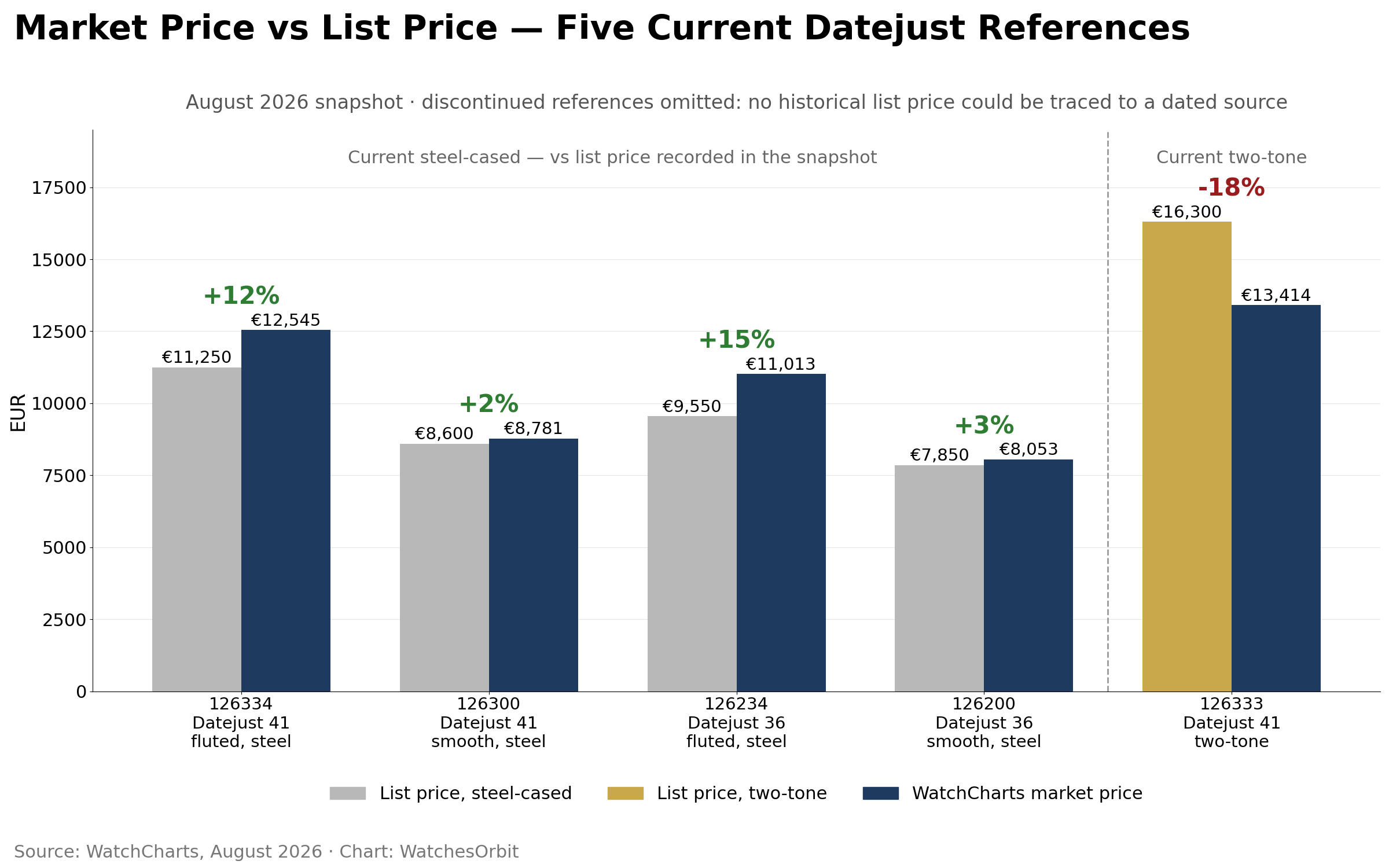
Four of the ten are two-tone: the discontinued 16233, 69173 and 16013, and the current 126333. The one current two-tone reference trades below its snapshot list price, while two of the three discontinued two-tone references, the 69173 and 16013, show the two largest one-year rises among the discontinued five. In our Submariner dataset the current two-tone references also sat below list while the current steel references sat above it. That is a position recorded in two snapshots, not a trend.
Just outside the top ten
Eleventh is the 116234, the previous-generation steel Datejust 36 with a white-gold fluted bezel, on 2,607 sales. Twelfth is the current 126331, the Datejust 41 in steel and Everose gold, with 2,258 sales at 14% below its recorded list price. The highest-ranked 31 mm reference in our dataset is the current 278274, in steel with a fluted bezel, at number eighteen: 1,504 sales and a 15.4% one-year rise.
Frequently asked questions
Which Datejust trades furthest above list price?
Among the current-production references in our August 2026 snapshot, the Datejust 36 126234 trades 15% above its recorded list price, followed by the 126334 at 12%. We do not show list-price comparisons for discontinued references in this article, because their historical list prices could not be traced to a dated source.
Datejust 36 or 41 — which one trades more?
Across all 181 references in our dataset, 36 mm references recorded 45,730 sales in twelve months and 41 mm references 26,366 — our aggregation of the same snapshot. The single most-traded reference, however, is the 41 mm 126334 with 10,217 sales; the most-traded 36 mm reference, the two-tone 16233, recorded 6,300.
How far below list price does the Datejust 126333 trade?
In our August 2026 snapshot, the 126333 had an estimated market price of €13,414 against a recorded list price of €16,300, approximately 18% below list. The dataset establishes the price gap but does not identify its cause.
Do you offer these references?
Five of the ten are represented in our Datejust collection, with options starting from €199. The full Rolex range covers Submariner, GMT-Master II, Daytona and Day-Date as well.
Methodology and reuse
Dataset: WatchCharts snapshot taken in August 2026, covering the 181 references in WatchCharts' Datejust collection at that time, Lady-Datejust models included. Ranking metric: WatchCharts' twelve-month sales volume per reference. Market prices are WatchCharts price estimates in EUR under its published methodology; the one-year trend is the change in that estimate over the preceding twelve months. List prices are Rolex European list prices as recorded in the snapshot for the configurations recorded there, shown for current-production references only; historical list prices for discontinued references are not shown because we could not trace them to a dated source and currency. Sales totals by case size were calculated by us from the individual reference-level records in the same snapshot; they are not separately published WatchCharts aggregates. Figures reflect the dataset captured for this analysis and may differ from current live values. Both charts were produced by WatchesOrbit directly from this dataset. Editors and publishers may reproduce them with attribution and a link to this analysis.
Related Products